Enormous geoglyphs etched into the Nazca Plateau in southern Peru, created by the Nazca civilization between 500 BC and 500 AD. Their purpose remains a subject of debate.
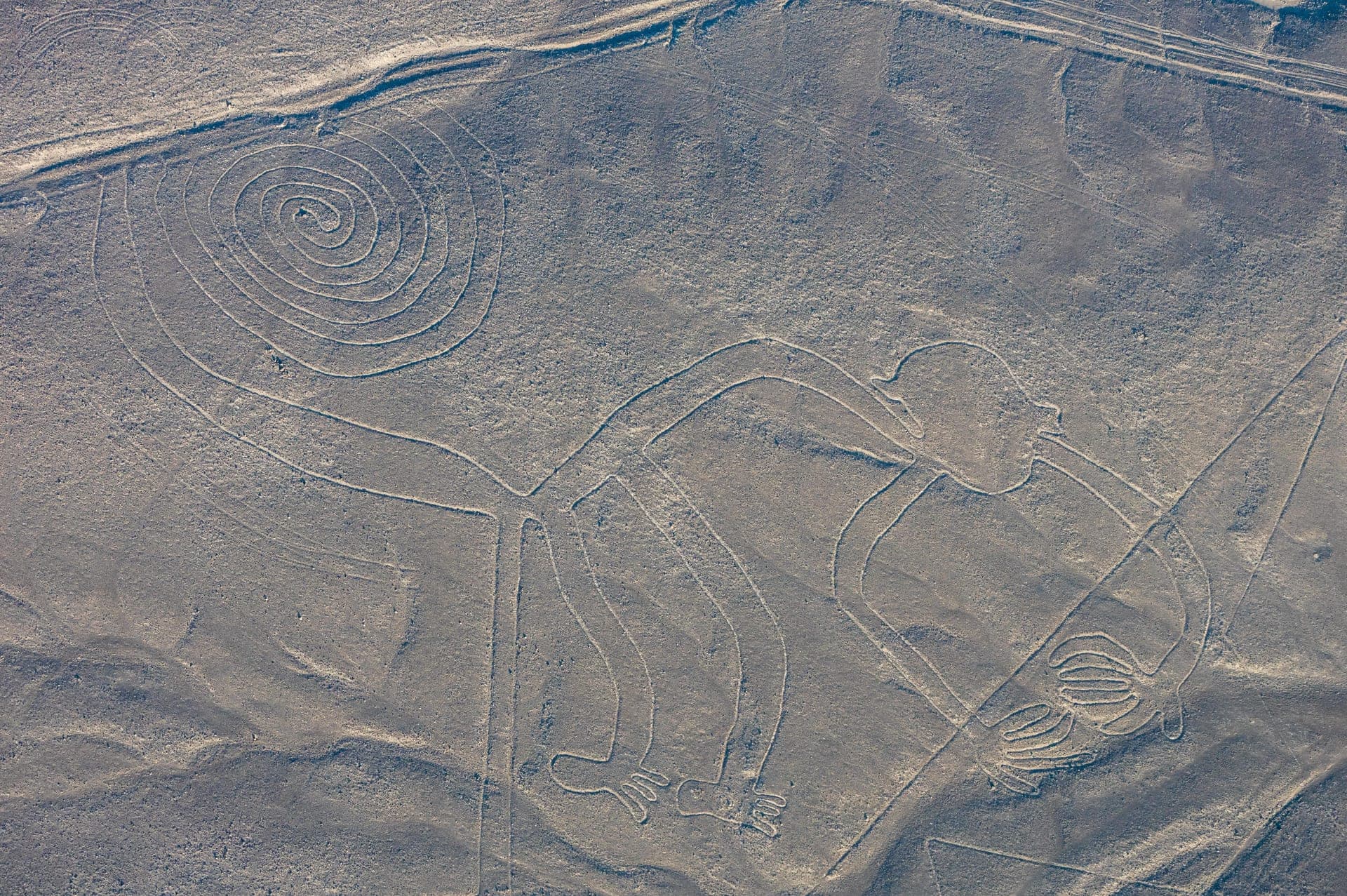
The Nazca Lines are a group of enormous geoglyphs spread across the Nazca Desert in southern Peru. Hundreds of figures depicting animals, plants, and geometric shapes are scattered across an area of approximately 450 square kilometers. The largest figure stretches about 370 meters in length. They were designated a UNESCO World Heritage Site in 1994.
Famous animal depictions include the Hummingbird (about 96 meters), the Condor (about 134 meters), the Spider (about 46 meters), and the Monkey (about 110 meters). Straight lines and geometric shapes extend for several kilometers with precision rivaling modern surveying techniques.
The figures were created by removing dark surface pebbles to expose the lighter ground beneath. The arid climate and minimal wind have preserved the geoglyphs for over 2,000 years. Small-scale experiments have demonstrated that large figures can be drawn from ground level using stakes and string.