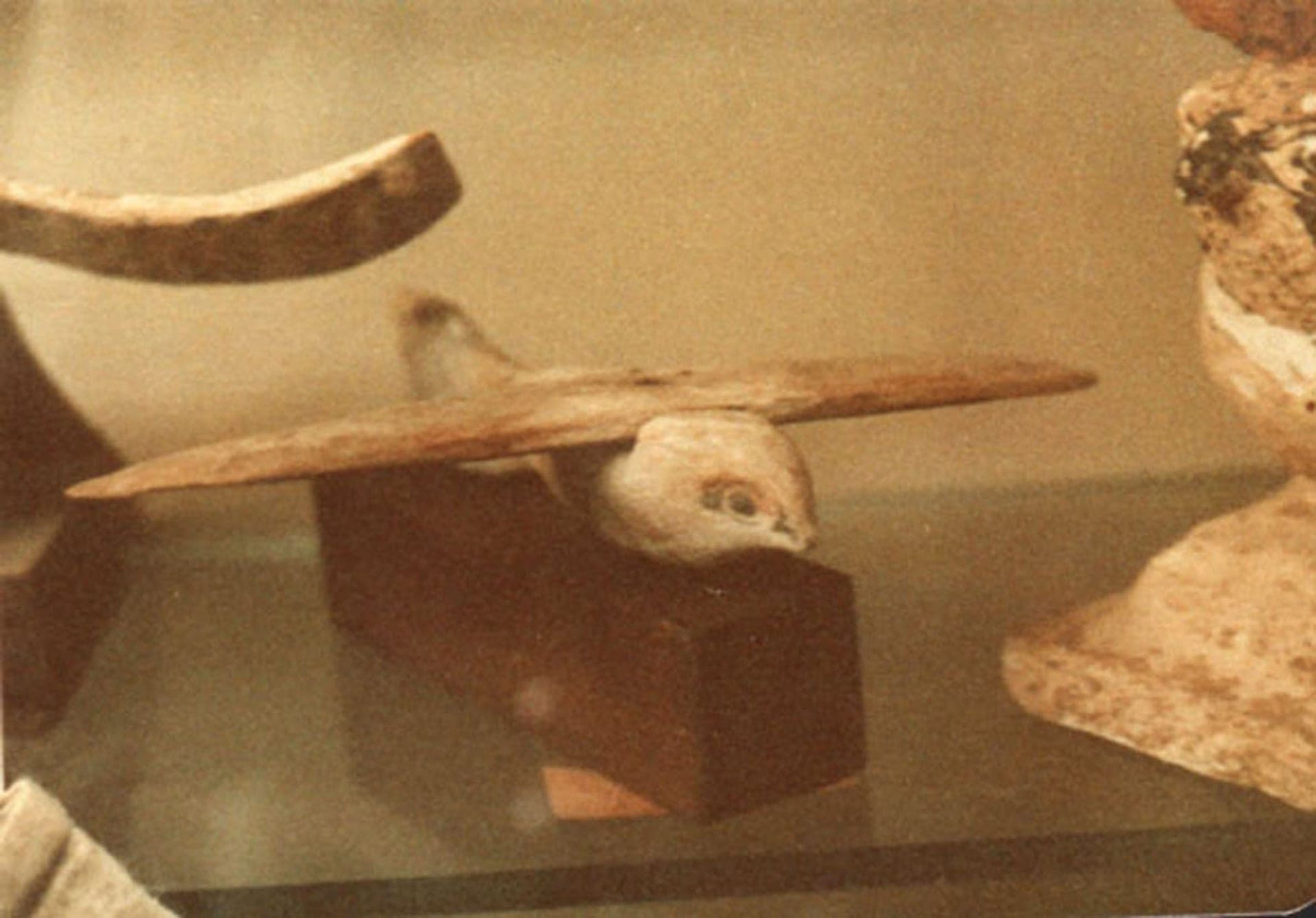
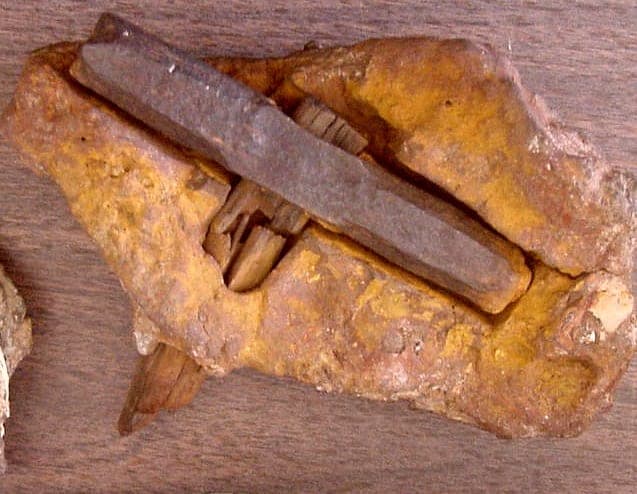
Disc-shaped stones allegedly discovered in Chinese mountains in 1938, said to contain records of an alien crash-landing 12,000 years ago. Their very existence is now in serious doubt.
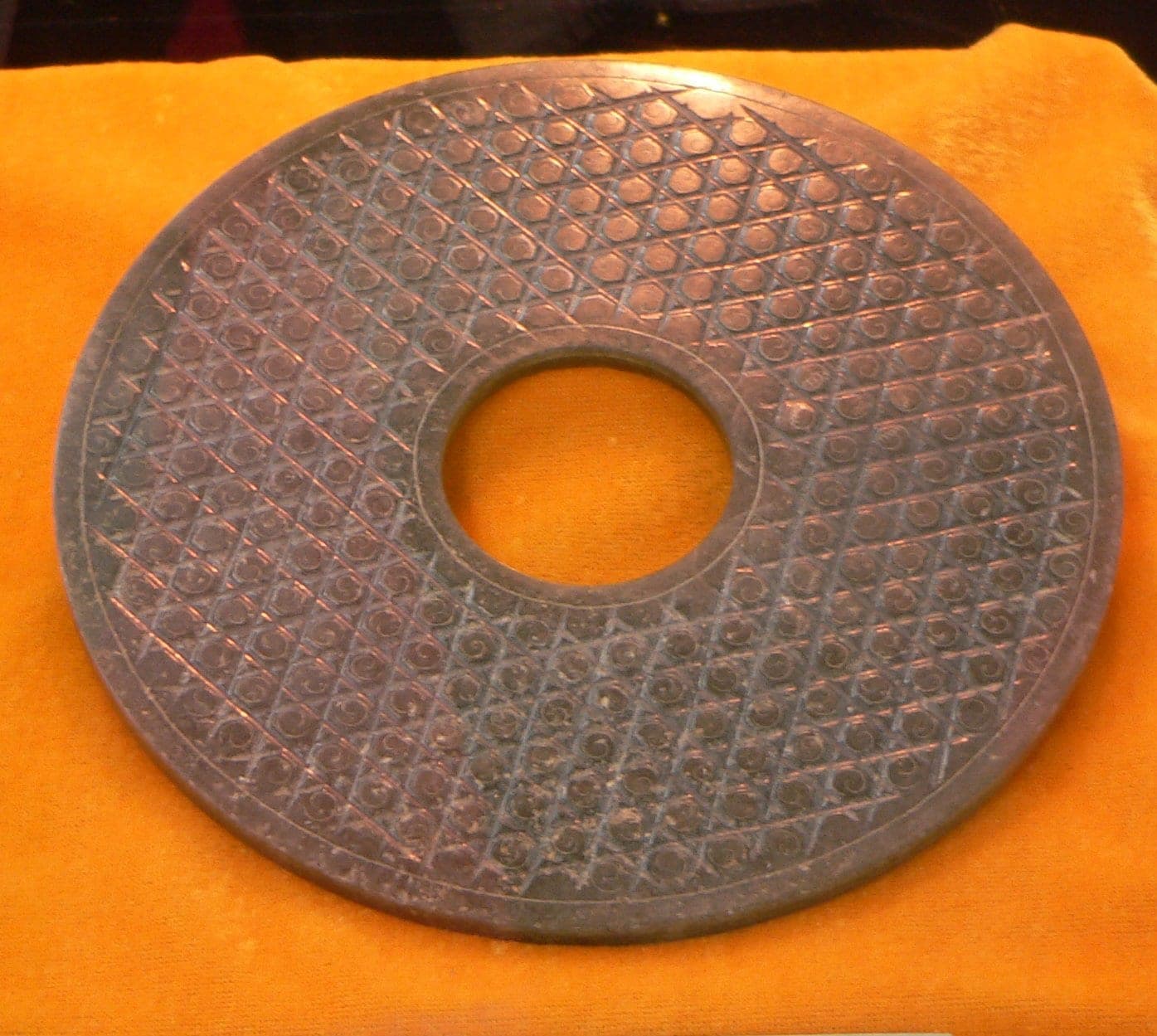
The year is 1938. In the Bayan-Kara-Ula mountains of western China, near the Tibetan border, an archaeological expedition led by Professor Chi Pu Tei of Peking University is exploring a series of high-altitude caves. Or so the story goes.
Deep inside the caves, the team allegedly discovered rows of neatly arranged skeletons. The bodies were small—roughly 120 centimeters tall—with disproportionately large skulls and thin, fragile limbs. Beside them lay hundreds of stone discs, stacked in piles.
Each disc measured about 30 centimeters in diameter with a hole in the center, resembling a vinyl record. Both sides were scored with a double spiral groove running from the center to the rim, and under close inspection, the grooves appeared to contain microscopic characters.
Seven hundred and sixteen discs in total. This is the origin legend of what the world would come to call the Dropa Stones.
The legend continues. In 1962, Professor Tsum Um Nui of the Beijing Academy allegedly succeeded in deciphering the inscriptions.
The message, it was claimed, was extraordinary. Twelve thousand years ago, a group of beings calling themselves the "Dropa" crash-landed in these mountains when their spacecraft malfunctioned. Repairs proved impossible. Stranded, they settled permanently. Initial contact with the local Ham tribe was violent, but eventually the two groups learned to coexist.
This "translation" reportedly appeared in a Soviet scientific journal in 1967 and reached global audiences in 1978 through the writings of Erich von Daniken. The UFO research community celebrated it as evidence of ancient alien contact.
But the moment anyone attempts to verify this story, everything dissolves.
First, "Chi Pu Tei" cannot be found in any Peking University records. No official documentation of a 1938 expedition to the Bayan-Kara-Ula mountains has been located.
"Tsum Um Nui" fares no better. No researcher by that name appears in the records of any Beijing academic institution. The Soviet journal article that supposedly published his findings has never been located in its original form.
And most critically: the Dropa Stones themselves do not exist. All 716 discs are missing. No museum, university, or private collection anywhere in the world holds a single specimen. The photographs that circulate online are not disc-shaped stones—they are images of Chinese bi discs, ceremonial jade objects that have nothing to do with the Dropa legend.
The Dropa Stones narrative first reached Western audiences through a 1978 book, but the sources cited within that work are exclusively secondary or tertiary. No chain of evidence leads back to a primary source.
Modern researchers have concluded that the entire story is a compounding of mistranslations, misattributions, and deliberate fabrication—a piece of folklore that accreted over decades until it hardened into a seemingly coherent narrative. The Dropa people are real—they are a Tibetan pastoral community—but they have no connection to extraterrestrials or stone discs.
The name "Tsum Um Nui" has been identified by several linguists as not being a valid Chinese name. This alone raises fundamental questions about the credibility of the decipherment claim. If the translator may not have existed, the translation certainly did not happen.
The Dropa Stones occupy a unique position in the pantheon of out-of-place artifacts.
Crystal skulls can be examined under electron microscopes. The London Hammer can be physically handled. Even the most dubious OOPArts are at least real objects with disputed interpretations. The Dropa Stones offer nothing to examine. There is a story, and there are no stones.
An unfalsifiable mystery may be the most durable kind. You cannot debunk evidence that does not exist. The Dropa Stones demonstrate, with remarkable clarity, humanity's capacity to construct compelling narratives from nothing—and to sustain them across generations, in defiance of every attempt at verification.