Carvings in an underground crypt at Dendera Temple in Egypt bear a striking resemblance to modern light bulbs. Did ancient Egyptians harness electricity? The debate between archaeologists and alternative historians rages on.
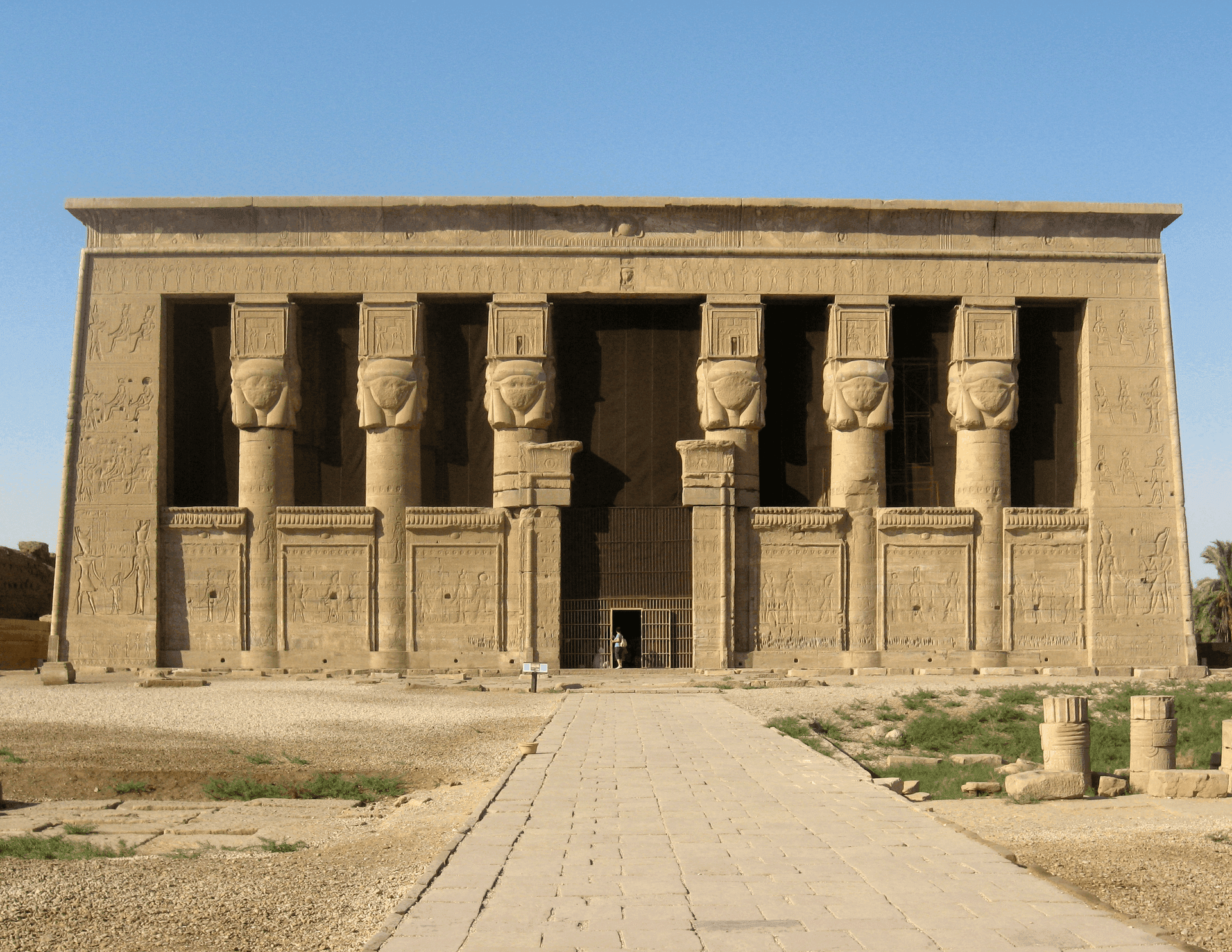
On the west bank of the Nile in southern Egypt stands the Dendera Temple complex, dedicated to Hathor, goddess of love, music, and joy. Constructed during the Ptolemaic period around 50 BCE, it is one of the best-preserved temple sites in all of Egypt.
Deep beneath the main temple, in a series of underground crypts closed to most visitors, a set of stone carvings has ignited one of the most persistent debates in alternative history.
The reliefs show a large, bulbous object with a serpent undulating inside it. At one end sits a lotus flower. From the other end, a thick cable-like element extends downward to a pillar-shaped base. The overall composition looks, to modern eyes, uncannily like an electric light bulb screwed into a socket.
In 1982, Austrian engineers spotted the resemblance—and a theory was born that would electrify the world of fringe archaeology.
"This is an ancient electric lighting device."
Austrian authors Peter Krassa and Reinhard Habeck argued that the Dendera carvings closely resemble a Crookes tube—a vacuum discharge tube invented in the 19th century and a precursor to modern cathode ray technology.
In their interpretation, the serpent inside the bulb represents a filament or plasma discharge. The lotus flower is the socket. The thick pillar is a power supply unit. Nearby, a djed pillar—a common symbol in Egyptian art—is reinterpreted as an insulator or electrical transformer.
Supporting this theory, proponents raised a tantalizing question. The interiors of pyramids and massive temples are covered with intricate, detailed wall paintings—yet almost no soot from torches has been found on the ceilings. How did ancient artisans paint in total darkness? Reflecting sunlight with mirrors has physical limits. If the Egyptians had electric lighting, everything would make sense.
Mainstream Egyptologists reject the electrical interpretation categorically.
The Dendera reliefs, they explain, depict a well-known scene from Egyptian creation mythology. The bulb-shaped form represents a lotus blossom—the sacred flower that, according to myth, emerged from the primordial waters of Nun on the first morning of creation. The serpent symbolizes the cosmic snake of creation, reborn each dawn with the rising sun.
This interpretation aligns perfectly with other reliefs in the Dendera complex and with Egyptian religious iconography found at temples across the country. The lotus-and-serpent motif is not unique to Dendera. It appears in numerous funerary and creation contexts throughout Egyptian art.
Critically, no physical evidence supporting an electrical interpretation has ever been found anywhere in Egypt. No wires. No batteries. No metal filaments. No generators. Not a single component of an electrical system has been recovered from any Egyptian archaeological site.
The soot issue, too, has conventional explanations. Ancient Egyptians used oil lamps burning castor oil or sesame oil, which produce far less soot than resinous torches. Archaeological evidence of these lamps is abundant.
The Dendera Light may be a textbook case of pareidolia—the human tendency to perceive meaningful patterns in unrelated forms.
We know what light bulbs look like, so we see light bulbs. Ancient Egyptians did not know what light bulbs looked like. What they saw was the cosmic lotus birthing the serpent of creation—a story as old as their civilization.
The same carving, separated by two thousand years of context, becomes two entirely different things. And perhaps that is the real fascination of the Dendera Light: not what it tells us about ancient Egypt, but what it reveals about the modern human mind and its irresistible urge to find the familiar in the foreign.