In 1970, an unidentified woman was found burned in a Norwegian valley. Multiple fake passports, removed clothing labels, and coded notes suggested she may have been a Cold War spy.
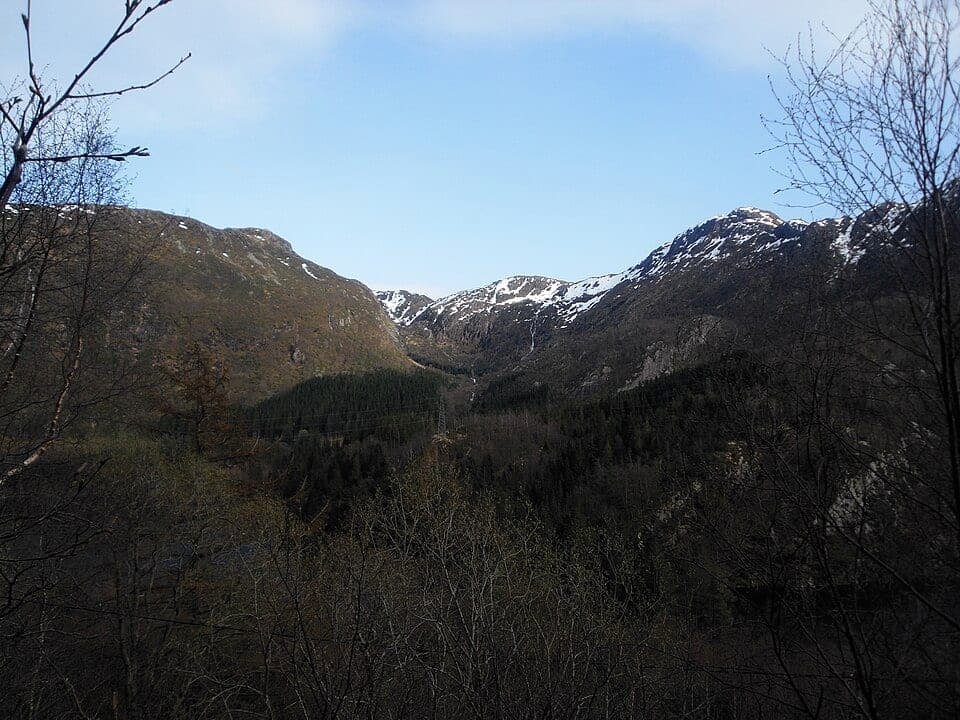
November 29, 1970. A man and his two young daughters were hiking through Isdalen — the "Ice Valley" — a remote, rocky gorge near Bergen, Norway's second-largest city. Among the boulders, they found a body.
A woman lay on her back, severely burned. Her face was unrecognizable. Scattered around her were the remnants of sleeping pills, an empty liqueur bottle, and a partially melted plastic passport case.
But it was what was missing that disturbed investigators most. The woman's fingerprints had been chemically sanded away. Every label had been removed from her clothing. Every identifying mark had been erased.
Someone — perhaps the woman herself — had gone to extraordinary lengths to ensure she would never be identified.
As police dug deeper, the scope of the concealment became staggering.
Brand labels had been cut from every garment. Size markings had been scraped from her shoes. Her toiletries were generic, traceable to no specific country. At Bergen's central train station, two suitcases were linked to the woman. Inside: nine different sets of identity documents, wigs, glasses, and currency from multiple countries.
Among the suitcase contents, investigators found a diary-like series of notes written in code. When cracked, the entries turned out to be a meticulous log of cities and dates. Bergen, Paris, Hamburg, Geneva, London — the woman had been moving across Europe for months.
At each stop, she registered at hotels under a different alias. Geneviève Lancier. Claudia Tielt. Finella Lorenz. Elizabeth Leenhoff. At least eight false names were confirmed.
Hotel staff remembered her. She spoke fluent French, German, English, and Dutch. She constantly changed rooms. She avoided conversation. She appeared frightened.
Norway in 1970 sat on NATO's northern flank, a frontline state in the Cold War. The Bergen area hosted critical Norwegian naval installations.
The profile was unmistakable: multiple aliases, linguistic fluency, a calculated itinerary across European capitals, and a forensic-grade erasure of personal identity. The Isdal Woman matched the profile of an intelligence operative.
The question was: whose side was she on? And who wanted her dead — or did she take her own life to avoid capture?
Norwegian intelligence agencies have denied involvement, but portions of the original case files were later found to be "missing."
In 2016, Norwegian broadcaster NRK and the BBC launched a joint reinvestigation. Modern forensic techniques — isotope analysis and DNA profiling — were applied for the first time.
Isotope analysis of the woman's teeth and bones suggested she grew up in central Europe, likely southern Germany or eastern France. Her dental work was consistent with techniques used in the Eastern Bloc.
In 2018, her body was exhumed for fresh DNA samples. Genetic genealogy research is ongoing, but no definitive identification has been announced.
The woman who lay burned in the Ice Valley has remained nameless for over half a century. Who she was, whom she served, and whether she died by her own hand or another's — these questions linger like the cold Norwegian fog that rolls through Isdalen each winter.
The Cold War ended. Her mystery did not.