In 1922, six members of a family were brutally murdered with a mattock on an isolated Bavarian farm. Evidence suggests the killer had been hiding in the attic beforehand — and stayed for days after.
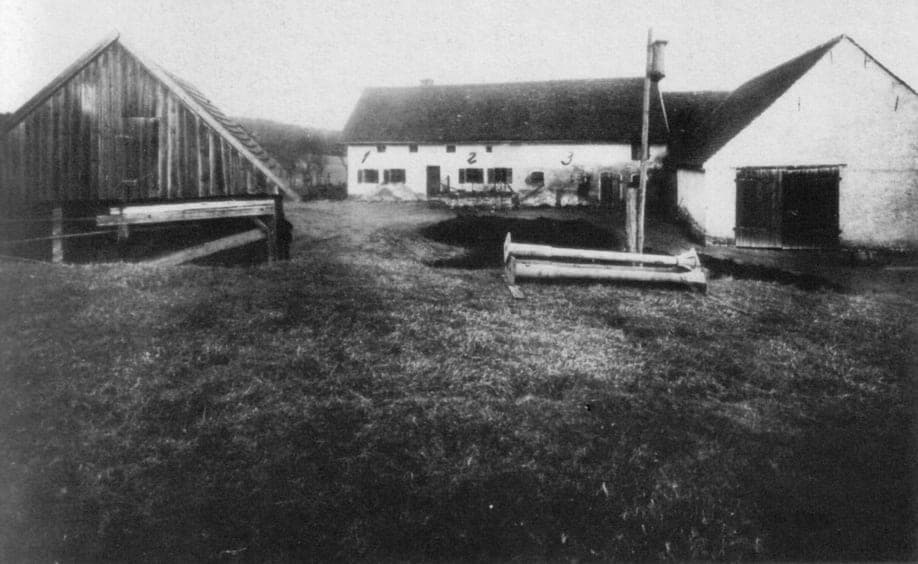
March 1922. The Hinterkaifeck farmstead, deep in the Bavarian countryside, sixty kilometers north of Munich. Farmer Andreas Gruber had noticed something disturbing.
There were footprints in the snow. They led from the edge of the forest to the farm. But there were no footprints leading back.
Someone had come. And they had not left.
Days earlier, Andreas had heard noises in the attic. A set of house keys had gone missing. He mentioned it to neighbors in town: "I think someone is living in my roof."
He did not call the police.
On the evening of Friday, March 31, the killer struck.
Andreas Gruber (63), his wife Cäzilia (72), their widowed daughter Viktoria Gabriel (35), and Viktoria's seven-year-old daughter Cäzilia were lured into the barn one by one. Each was killed with a mattock — a heavy, pickaxe-like tool — struck repeatedly in the head.
The killer then entered the main house and murdered two-year-old Josef, who lay sleeping in his crib, and the maid, Maria Baumgartner (44). It was Maria's first day on the job. The previous maid had quit, claiming the farm was haunted.
The most harrowing detail belongs to young Cäzilia. Clumps of her own hair were found clutched in her fists. She had torn them out herself — likely while lying in the dark barn, paralyzed with terror, waiting for death.
The bodies were not discovered until April 4, when neighbors grew concerned. The children had not appeared at school. Mail was piling up. Yet smoke was still rising from the chimney.
When a search party entered the farm, they found all six victims. But it was what they found next that sent ice through the investigators' veins.
The livestock had been fed. Food had been eaten in the kitchen. Someone had been living in the farmhouse for days — surrounded by the dead.
The investigation was enormous by 1920s standards. Over 100 suspects were interrogated. None was charged.
The prime suspect was Lorenz Schlittenbauer, Viktoria's former lover and the likely father of young Josef. A financial dispute over child support gave him motive. He was also one of the first people at the crime scene — and some investigators noted his behavior was suspiciously composed. But the evidence was circumstantial.
Another theory centers on a darker secret. Rumors had long circulated that Andreas had an incestuous relationship with his daughter Viktoria, and that Josef's true father was Andreas himself. Could someone in the village have decided to erase the scandal by force?
In 1986, Munich police academy students reopened the case as a training exercise. They reached no conclusion. A 2007 reinvestigation met the same fate.
The skulls of the six victims were sent to Berlin during the Nazi era for phrenological study and subsequently lost during World War II. With most physical evidence destroyed, a resolution is now virtually impossible.
The Hinterkaifeck farmstead no longer exists. The land is an empty field in the Bavarian countryside. But the question raised by those footprints in the snow — who came to the farm and never left — has itself never departed. It lingers in the darkness, unanswered, a century on.