Since 1981, unexplained luminous phenomena have been repeatedly observed in Norway's Hessdalen valley. Scientific monitoring continues, but a complete explanation remains elusive.
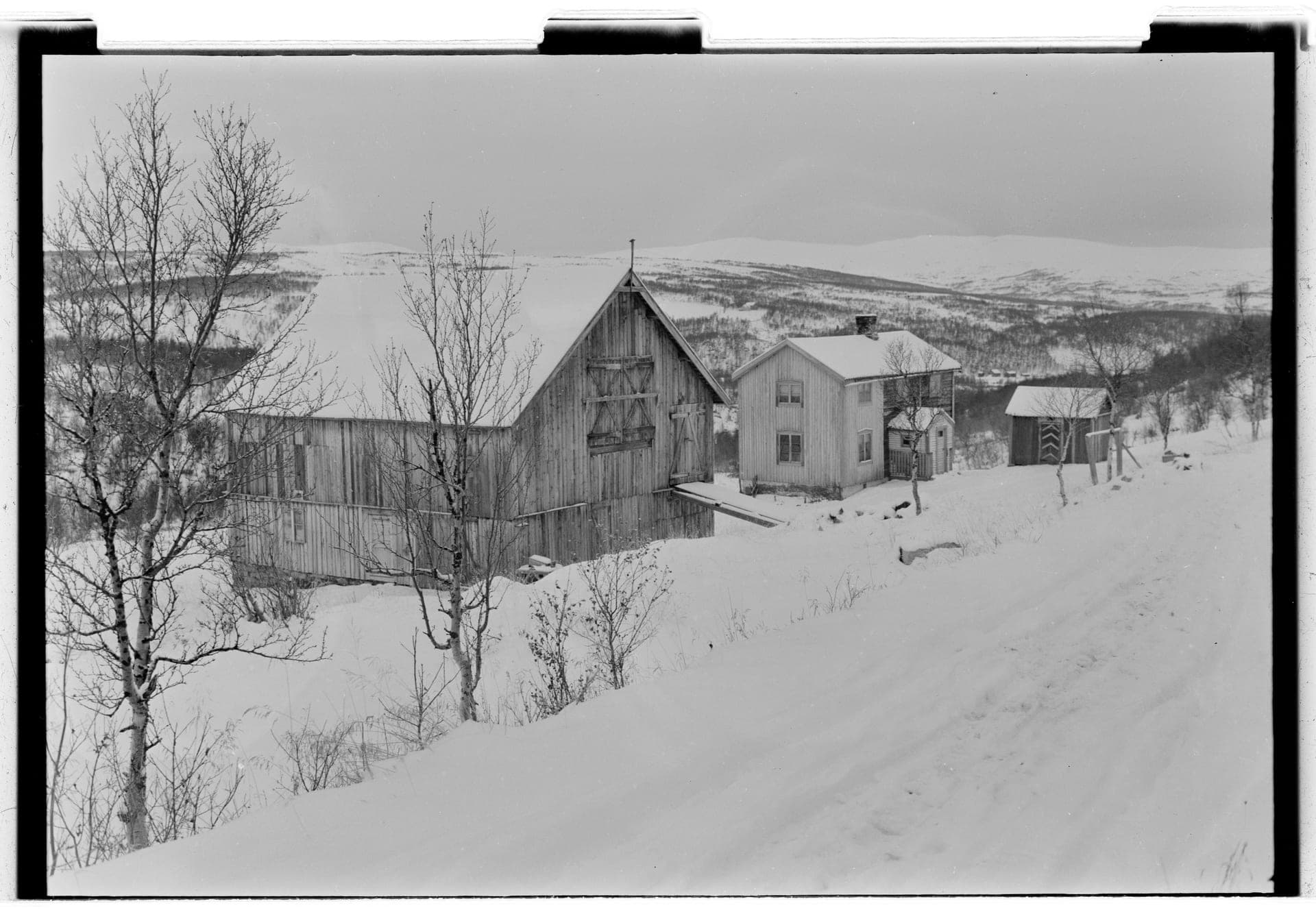
Hessdalen is a small valley in central Norway's Tronderlag county, home to roughly 150 people. In the winter of 1981, this quiet settlement became the focus of paranormal researchers around the world.
Residents began reporting strange lights in the night sky.
Glowing white spheres drifted along the mountain ridgelines. They shifted between yellow and red, hovering in the air for seconds or minutes at a time. Sometimes they floated just above the ground. Sometimes they vanished at astonishing speed. At the peak, sightings were reported 15 to 20 times per week.
This was not the testimony of a single eccentric. Hundreds of residents were witnessing the same phenomenon.
What sets the Hessdalen Lights apart from most UFO reports is that scientists took them seriously from the start.
In 1984, Norwegian and Swedish researchers launched "Project Hessdalen." Radar units, spectrometers, magnetometers, and infrared cameras were deployed across the valley. Remarkably, the instruments confirmed the phenomenon.
Radar registered returns at the same positions as the visible lights. Spectral analysis showed that the light's electromagnetic signature did not match any known aircraft or astronomical event. This was not a hallucination or a misidentification. It was a physically real phenomenon.
In 1998, Italian physicist Erling Strand and colleagues established an Automatic Measurement Station (AMS) in the valley. Cameras and sensors have monitored the skies around the clock ever since.
The frequency of sightings has dropped significantly from the early-1980s peak—now averaging 10 to 20 per year. But the lights continue to appear.
The Hessdalen data set is one of the most robust collections of anomalous light observations in the world, spanning over four decades of continuous scientific recording.
Several scientific explanations have been proposed. The valley's geology includes deposits of iron sulfide and copper. Researchers have suggested these minerals, in contact with river water, could form a natural "battery" that discharges into the atmosphere as luminous plasma.
Another theory points to piezoelectric effects from tectonic stress in the valley's rock formations. A third hypothesis involves ionization caused by the decay of radon gas seeping from the ground.
Yet none of these theories fully account for all the observed properties—the color changes, movement patterns, variable duration, and the sharp decline in frequency over the decades.
The Hessdalen Lights represent one of the rarest cases in the study of anomalous phenomena: a mystery that has been systematically observed, measured, and documented by mainstream science, yet remains unexplained.
On dark Norwegian winter nights, the valley still glows with lights that have no name. They are a quiet reminder that the natural world still holds secrets it has not yet shared with us.