Spontaneous human combustion—the alleged phenomenon of a human body igniting without an external source of fire—has been reported for centuries, yet no case has ever been scientifically proven.
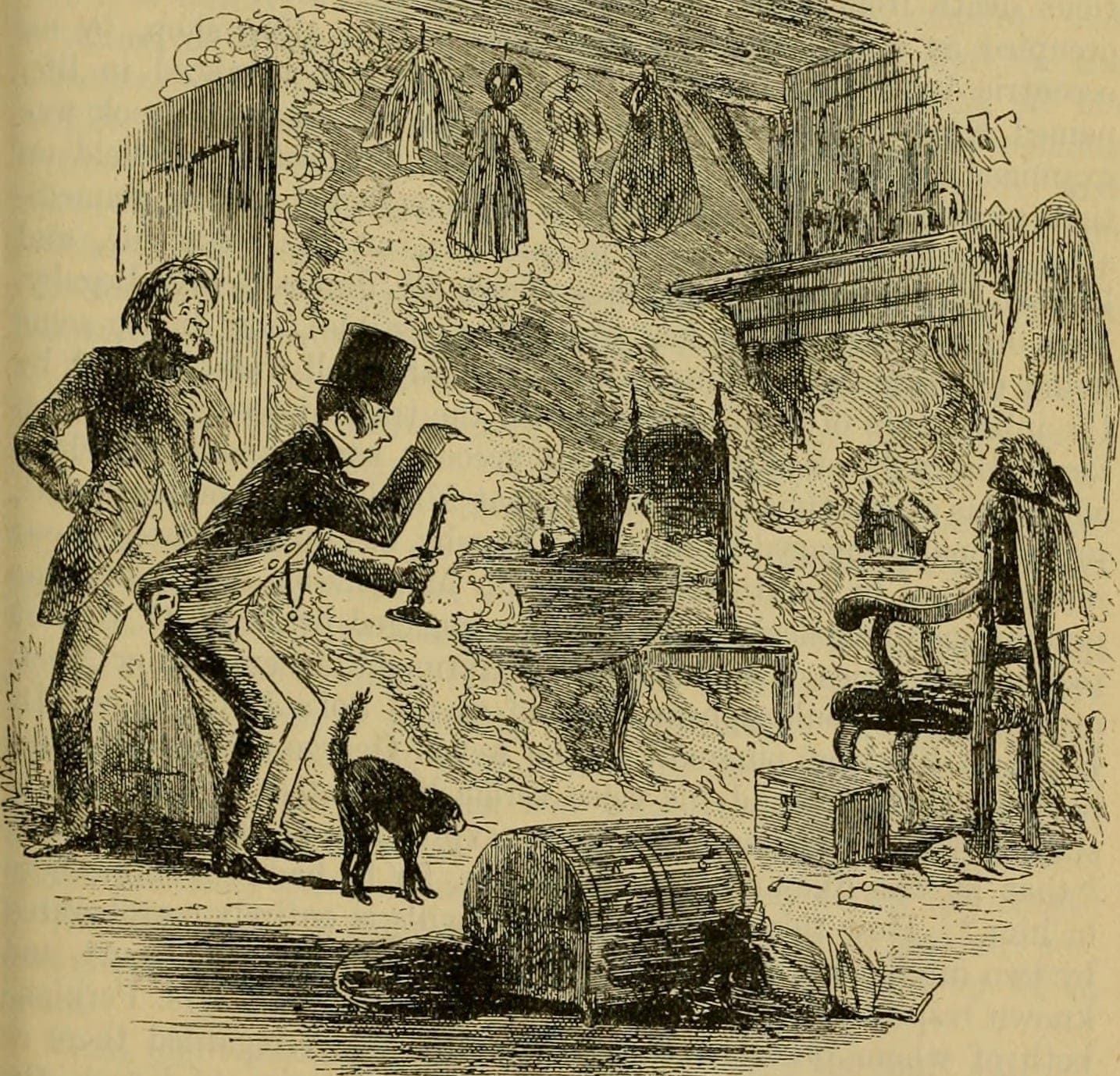
July 2, 1951. St. Petersburg, Florida. When landlord Pansy Carpenter visited 67-year-old Mary Reeser's apartment, she noticed the doorknob was abnormally hot. Police and firefighters forced the door open and found a scene that defied explanation.
Mary Reeser's body had been almost entirely reduced to ash. All that remained was her left foot below the ankle, a fragment of skull shrunken to the size of a teacup, and the coil springs of her armchair. Reducing a human body to ash normally requires sustained temperatures exceeding 1,700 degrees Celsius for several hours. Yet a stack of newspapers just feet from the chair was not even singed.
Extreme heat had been generated in a localized area, with virtually no spread to surrounding materials.
This is the hallmark of what is known as spontaneous human combustion, or SHC.
Records of SHC date back to 1663, when a Parisian physician documented a woman who burned to death in her sleep. Since then, more than 200 alleged cases have been recorded.
In 1731, Italian Countess Cornelia Bandi was discovered burned to nothing in her bed. A yellowish, greasy residue coated the walls of her room, yet the bedding was largely intact.
A pattern emerges across cases. Victims are often elderly and living alone. The body is reduced to ash while extremities and nearby furniture remain untouched. And no external ignition source can be identified.
Modern forensic science has proposed the "wick effect" as the most plausible explanation for many SHC cases.
If clothing catches fire from a small source—a dropped cigarette, a candle—the fabric acts as a wick, and the body's subcutaneous fat serves as fuel, much like a candle. This slow, low-temperature burn can sustain combustion for hours, gradually reducing the body to ash while minimizing damage to the surrounding environment.
In 2001, a BBC experiment demonstrated the wick effect by igniting a clothed pig carcass. The body burned for over five hours, and bones were reduced to powder—closely replicating SHC scene characteristics.
The wick effect accounts for many features of SHC cases. But not all.
In some cases, no ignition source has ever been identified. In others, the speed of combustion appears inconsistent with a slow wick-effect burn. In 2010, Irish coroner Ciaran McLoughlin examined the death of 76-year-old Michael Faherty, found burned in his home near a fireplace. McLoughlin officially ruled out the fireplace as the cause and recorded the death as spontaneous human combustion—an extraordinarily rare forensic ruling in modern history.
The mainstream scientific consensus holds that SHC does not exist as a distinct phenomenon. Every case, the argument goes, involves an undetected ignition source and the wick effect.
But the recurring pattern—the ash, the untouched surroundings, the absent source of flame—continues to surface in forensic records across centuries and continents. Whether it is a genuine anomaly or simply the outer edge of understood combustion science, the image of a burned body surrounded by an untouched room remains one of the most unsettling in the annals of unexplained phenomena.